You’re Losing Because of Your First Move in Checkers!
- checkersbest
- Apr 13
- 5 min read
If you have been unable to win at checkers because you just cannot understand why, there may be another factor affecting you besides your level of proficiency – namely, your first move! However, most people underestimate the significance of the initial move in determining the flow of the whole game.

Most beginner players do not pay too much attention to their first move in checkers and simply play a piece without any forethought, saying that they will “sort things out later on.” In checkers, the first step is usually decisive in terms of your future attack or defense during the game.
Here, you will find out how important the first move can be, which common mistakes to avoid, and how you can enhance your opening moves efficiently and easily.
Why the First Move Matters More Than You Think?
Checkers isn’t only about capturing the opponent’s checkers; it’s all about strategy and tactics. Your opening move is an opportunity to establish a solid foundation.
By making a smart opening move, you will automatically be able to:
Have better control over key squares
Protect your checkers by keeping them connected
Generate additional moves for yourself later on
Conversely, an ill-conceived first move will make it difficult for you to compete against your adversary. You might not feel its impact right away, but soon enough, you will be responding rather than controlling the game.
Common First Move Mistakes That Lead to Losses
Most of the losses that occur at the beginner stage happen due to some common mistakes. However, the challenge is identifying these errors at an early stage.
Making Moves Without Having a Strategy
Another common mistake beginners commit is making random opening moves. When there is no plan, your opponent takes control of the game. A strategy such as trying to occupy the center helps to win the game.
Not Considering the Control of the Board
The central position of the board has great power in checkers. By missing this chance to control this position, your opponent benefits from your mistake. Most players who gain control over the center determine the speed of the game.
Making Pieces Vulnerable Too Soon
Some players decide to adopt an aggressive strategy by exposing their pieces. Although this is a good strategy, it may lead to losing pieces quickly, which leaves you disadvantaged in the game.
What a Good First Move Looks Like?
In the online game of checkers, there may not be a perfect first move, but experienced players have a basic strategy: open wisely and take the lead.
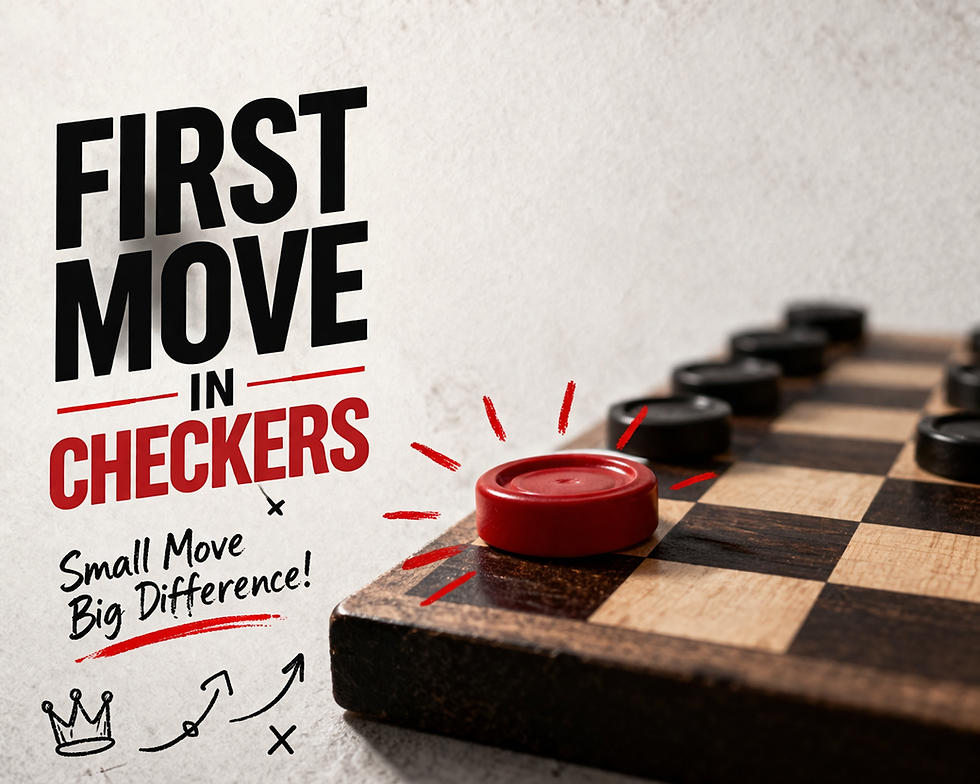
A sound first move is typically characterized by:
Moving your checker towards the center
Maintaining balance in your formation
Playing cautiously and avoiding any reckless move
With such an opening strategy, you remain flexible. You do not make your decisions at once but rather adapt according to your opponent's actions.
Simple Strategies to Improve Your Opening
Enhancing your opening play does not demand complicated theories. Minor alterations in your thought process may result in significant improvement.
Concentrate on Positioning Rather Than Taking Pieces
The opening phase of the game involves more than just taking opponents’ pieces. Your pieces should be positioned appropriately; then, taking opponents’ pieces will be natural.
Maintain Balance
Do not concentrate too much on one side of the checkers board. Maintaining balance enables you to have many future possibilities and helps protect your position.
Plan Ahead
Take some time before making your initial move and ask yourself questions such as:
What is my opponent’s next move likely to be?
Is there a possibility that this move will cause me a disadvantage in the future?
Even a few seconds of thinking can prevent early mistakes.
Quick Tips to Strengthen Your First Move
Following are some quick pointers to follow in your next match:
Try to get close to the center
Try not to rush your first move
Always keep your pieces together
Don't take any chances unnecessarily in the beginning
These small changes can help you perform well.
How the First Move Shapes the Game?
This initial move does not only determine the start of the game but will be felt through the entire duration.
During the early phase of the game, it enables you to gain control over the board. In the middle phase, your decision will determine whether attacking or defending will be easier for you. At the end phase, it becomes clear what difference the initial move made.
A good opening gives you an advantage, and your position on the board will show it.
A Simple Comparison: Right vs Wrong Start
Consider how a slight alteration in the opening play can affect the outcome dramatically.
In the case where an inattentive initial play is made, your opponent will have the opportunity to dominate the central squares, putting you into a defensive stance.
However, when you open with a strategically intelligent play aimed towards the center, the number of opportunities for you is increased. The move can serve an offensive, defensive or strategic purpose depending on the nature of the game.
The single difference makes all the difference.
Why Many Players Keep Repeating the Same Mistake?
One of the reasons for players’ inability to progress in games is the absence of analysis of one’s games. Players concentrate on the results of the game but neglect the way the game began.

In case you lost the game, then you should review from the beginning of your game and think about whether:
Your move was favorable for you?
It provided any advantages for your adversary?
How to Practice Better Opening Moves?
Enhancing your opening starts with better awareness and consistency. No need to know complicated strategies; rather, you just have to think smarter.
Observe the opening of seasoned players' games, seeing what moves they avoid and how they maintain control. Apply these same concepts when playing your own games.
Another trick is to try out different openings to see which ones suit you best.
Final Thoughts
If you keep losing in checkers, do not automatically assume that you have bad luck or are facing difficult competitors. There may be other reasons why you are losing, and one of them is the way you are beginning your games.
A good opening move will determine not only the course of your game but also how you will play in the long run.
With better opening moves, you can:
Play with more assurance
Commit fewer errors
Boost your likelihood of success
Remember this when you begin your next game. Think carefully before making your opening move because it could make the difference between losing and winning in checkers.
Comments